
If you've been running an ecommerce store for any amount of time and your revenue feels inconsistent, there's a good chance your funnel is the problem.
Most ecommerce businesses I've seen either don't have a real funnel at all, or they have pieces of one stitched together without any clear logic connecting them. The result is near predictable: traffic comes in, some of it converts, and the rest disappears forever. You end up paying to acquire customers you'll never see again, and the whole thing becomes an expensive guessing game.
A well-built ecommerce sales funnel changes that entirely. It gives you a structured path that moves potential customers from their first encounter with your brand all the way through to purchase, repeat purchase, and referral. And when you get it right, your cost per acquisition drops, your conversion rate climbs, and you stop relying on a constant flood of new traffic just to keep the lights on.
This guide will walk you through everything you need to know: what an ecommerce funnel is, how it works, the five stages that matter, how to build one from scratch, and how to measure its performance.
What is an Ecommerce sales funnel?
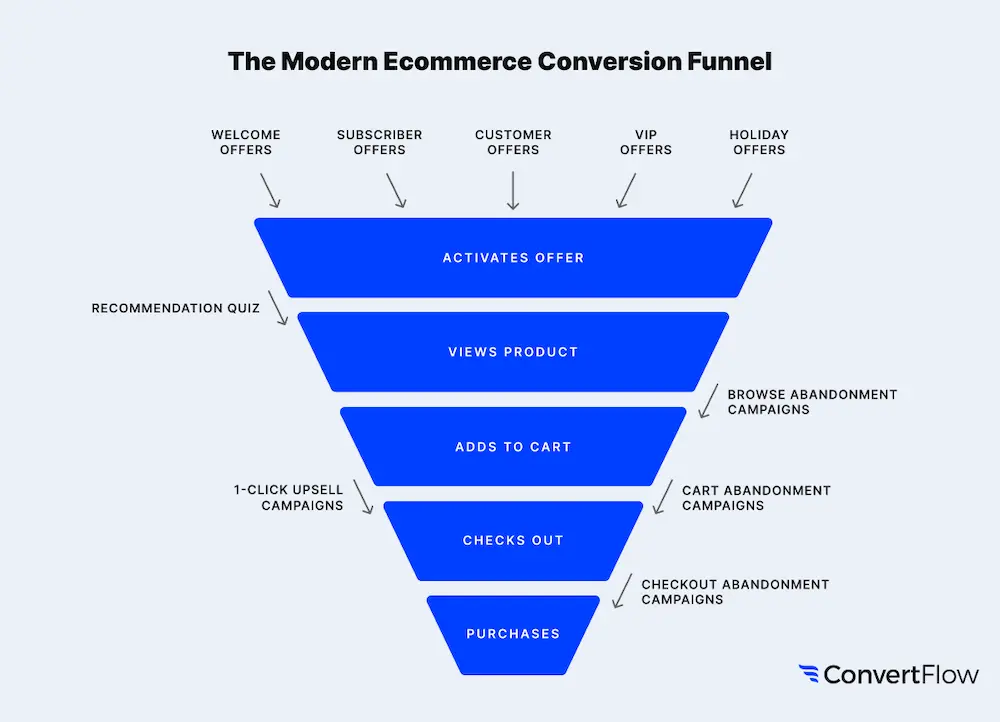
An ecommerce sales funnel is the structured path that takes a potential customer from a stranger to a paying customer and, ideally, to a loyal repeat buyer. The word "funnel" describes how a large number of people enter at the top when they first become aware of your brand, and a smaller, more qualified group makes it through to purchase at the bottom. Here's how it looks:
Your job as a store owner is to design each stage of that path so that the right people move forward and the friction that stops them from buying is systematically removed.
How Ecommerce Conversion Funnels Work
The core logic of a conversion funnel is simple. People don't buy from brands they've never heard of, on products they don't understand, in checkout flows they don't trust. Every objection a potential customer has, whether it's about the product, the price, the shipping, or the brand itself, represents a leak in your funnel. When you identify and fix those leaks, more people make it to the end and complete a purchase.
The mechanics involve multiple touchpoints across several channels. A customer might discover your store through a Google ad, browse your product page, leave without buying, get retargeted on Instagram two days later, come back and read your reviews, and finally complete a purchase on their third visit. That entire sequence is your funnel in action. If any one of those stages is broken or missing, the sale doesn't happen.
Read more: Digital marketing sales funnel
The 5 Stages of an Ecommerce Funnel
Stage 1: Awareness
The awareness stage is where potential customers first encounter your brand. They don't know you yet, they're not looking for you specifically, and they have no reason to trust you. Your only goal at this stage is to get their attention and make a strong first impression that makes them want to learn more.
The channels that drive awareness vary depending on your business model and budget:
- Paid social advertising on platforms like Meta and TikTok is the most common and scalable driver of awareness for ecommerce brands.
- Organic search through SEO brings in customers who are actively looking for products like yours.
- Influencer partnerships and content marketing can generate awareness at scale when executed well.
The key insight here is that awareness-stage content should not be focused on closing a sale. It should clearly introduce your brand, product, and value proposition so the right audience keeps paying attention.
Stage 2: Interest and Consideration
Once someone is aware of your brand, the consideration stage is where they decide whether your product is worth their money. This is where most ecommerce businesses lose the sale. Customers are comparing you to competitors, reading reviews, questioning whether the price is justified, and wondering whether you'll actually deliver on your promises.
Your job at this stage is to answer every reasonable objection before it becomes a reason to leave. Strong product photography, detailed product descriptions, customer reviews, comparison content, and clear shipping and return policies all serve a purpose here. Email sequences that nurture new subscribers by educating them on the product and the brand are most effective at this stage, because they give you multiple touchpoints with someone who has already shown enough interest to opt in.
According to research from Marketo, nurtured leads convert at a rate 47% higher than non-nurtured leads. That gap exists entirely because most brands skip this stage.
Stage 3: Conversion
The conversion stage is the checkout process, and it deserves far more attention than most store owners give it. Baymard Institute research discovered that the average documented cart abandonment rate for ecommerce is approximately 70%. That means roughly seven out of ten people who add a product to their cart leave before completing a purchase.
Some of that abandonment is inevitable, but a significant portion is caused by a checkout experience that introduces unnecessary friction, such as:
- Too many form fields
- Unexpected shipping costs
- A lack of trusted payment options
- A process that simply takes too long.
Conversion stage optimization means simplifying the checkout flow, clearly displaying trust signals, offering multiple payment methods, including buy-now-pay-later options, and being transparent about total costs before the customer reaches the final confirmation screen.
For higher-ticket products, this stage may also include a post-add-to-cart page that reinforces the value of the purchase with testimonials, guarantees, and social proof before the customer commits to the purchase.
Stage 4: Retention and Loyalty
Acquiring a new customer is significantly more expensive than retaining an existing one. Research from Bain and Company estimates that increasing customer retention by just 5% can increase profits by 25% to 95% (source). Despite that, most ecommerce businesses spend the overwhelming majority of their marketing budget on acquisition and virtually nothing on retention. That's a math problem, and it shows up in the numbers.
The retention stage begins the moment a customer completes a purchase. Your post-purchase email sequence, the packaging and unboxing experience, your customer service responsiveness, and the quality of the product itself all determine whether that customer comes back. Loyalty programs, personalized product recommendations, and exclusive offers for returning customers are the systems that convert one-time buyers into repeat customers who drive disproportionate revenue over time.
Stage 5: Advocacy and Growth
The final stage of the funnel is where your existing customers start doing your marketing for you. A customer who had a great experience with your brand and your product will share it, refer friends, leave reviews, and engage with your content organically. This word-of-mouth is the most cost-effective customer acquisition channel available to any ecommerce business, and it's entirely driven by how well you executed the previous four stages.
Keep in mind that advocacy doesn't happen automatically. It happens when you build a product worth talking about and then make it easy for your customers to share it. Some of the ways to achieve this include:
- Setting up referral programs that incentivize customers to recommend your brand
- Seding review requests that make it easy for satisfied customers to share their experience
- Using user-generated content strategies that amplify real customer stories on your blogs and social media pages
How to Build an Ecommerce Sales Funnel
Heres how to build an ecommerce sales funnel:
1. Define Your Target Audience Before Anything Else
The most common funnel-building mistake I see is starting with the tactics before defining who the funnel is for. If you don't know specifically who you're targeting, what their primary objection is, and what outcome they're hoping to achieve by buying your product, you can't write persuasive ad copy, build a product page that converts, or create email content that resonates.
That said, get this clarity first. Build a detailed profile of your ideal customer: their demographics, their pain points, what they've already tried, and what would make them choose you over a competitor.
2. Build Awareness Through the Right Channels
Once you know who you're targeting, choose your awareness channels based on where that audience actually spends their time.
Examples:
- For visual consumer products, Meta and TikTok ads tend to outperform search.
- For products that solve a specific problem people are actively searching for, Google Shopping and SEO deliver higher-intent traffic.
- For premium or aspirational products, influencer partnerships and organic content can generate awareness that paid ads alone can't create.
The goal is to be where your specific audience is, with a creative that stops them from scrolling past.
Read more: 5 stages of a successful B2B SaaS marketing funnel
3. Optimize Your Landing Pages and Product Pages
Your product page is the single most important conversion asset in your entire funnel. It needs to clearly communicate the value of your product, address the objections your target customer is most likely to have, and provide enough social proof that a first-time visitor will trust you with their money.
Some helpful tips are:
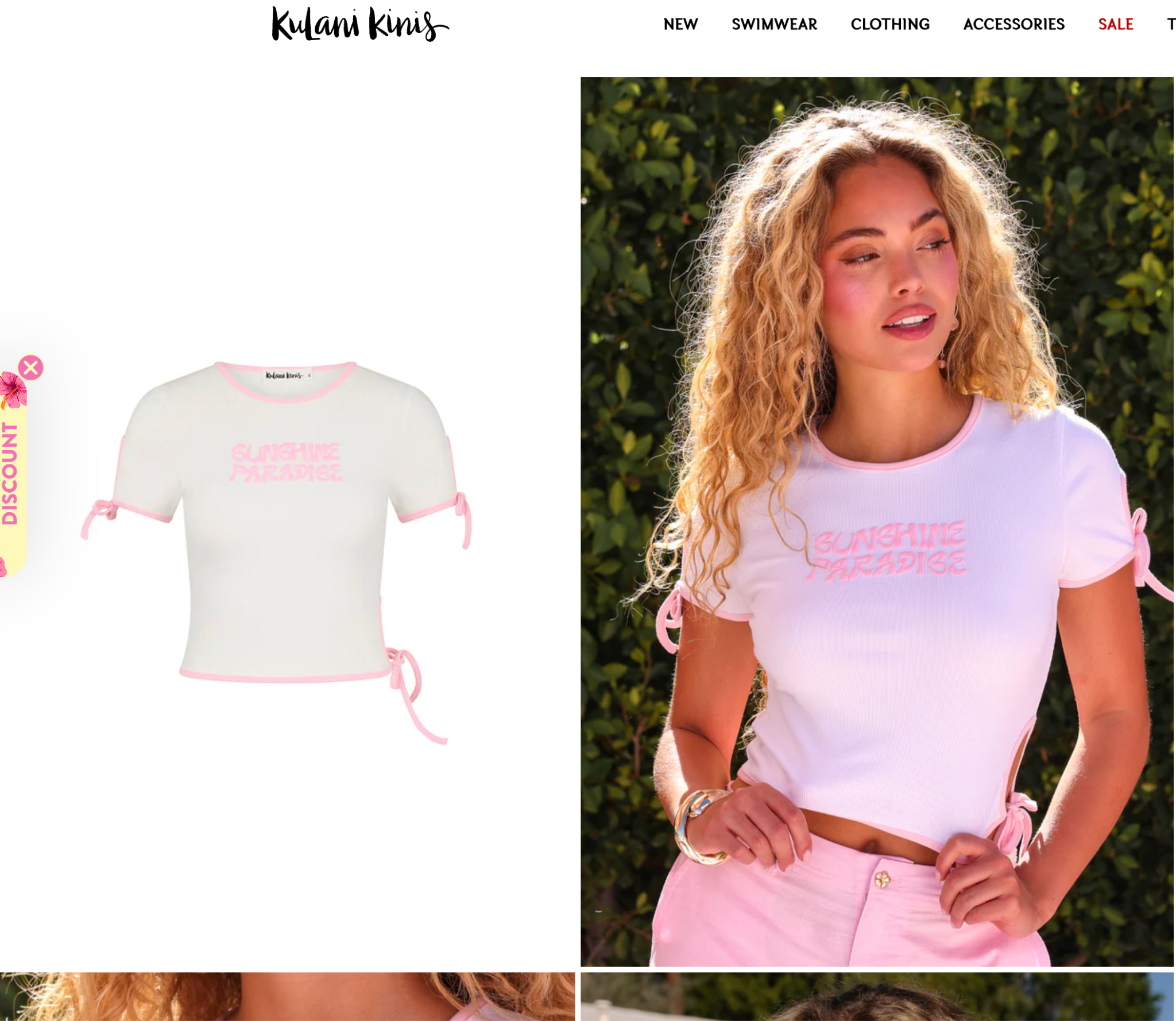
- Use product images to show the item in real use contexts, not just on a white background. Here's an example from Kulani Kinis, an Australian eCommerce brand that sells women's wear:
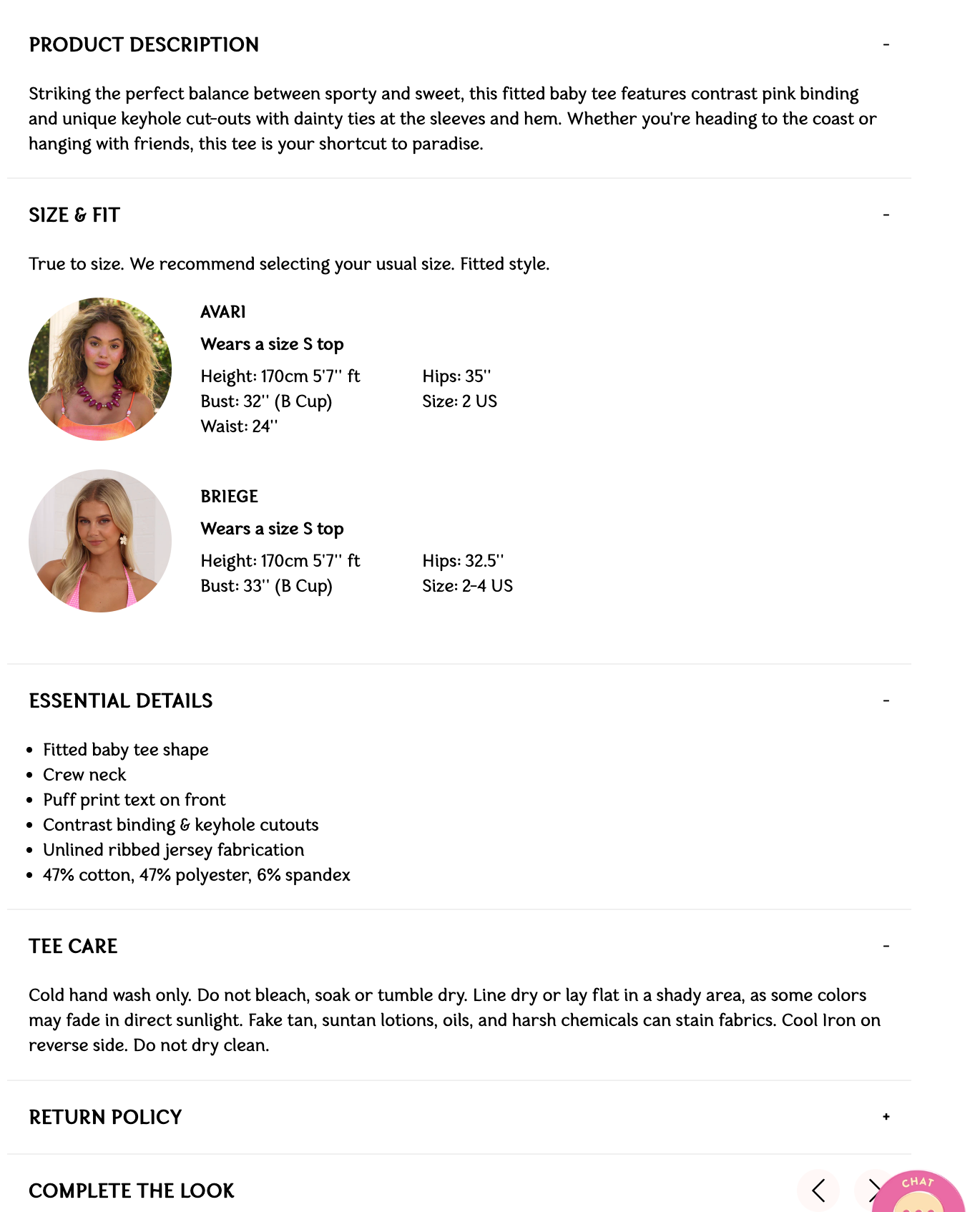
- Descriptions should be written from the customer's perspective, focusing on outcomes and benefits rather than specifications. Here's another example from the same brand that focuses on the specifics of the product:
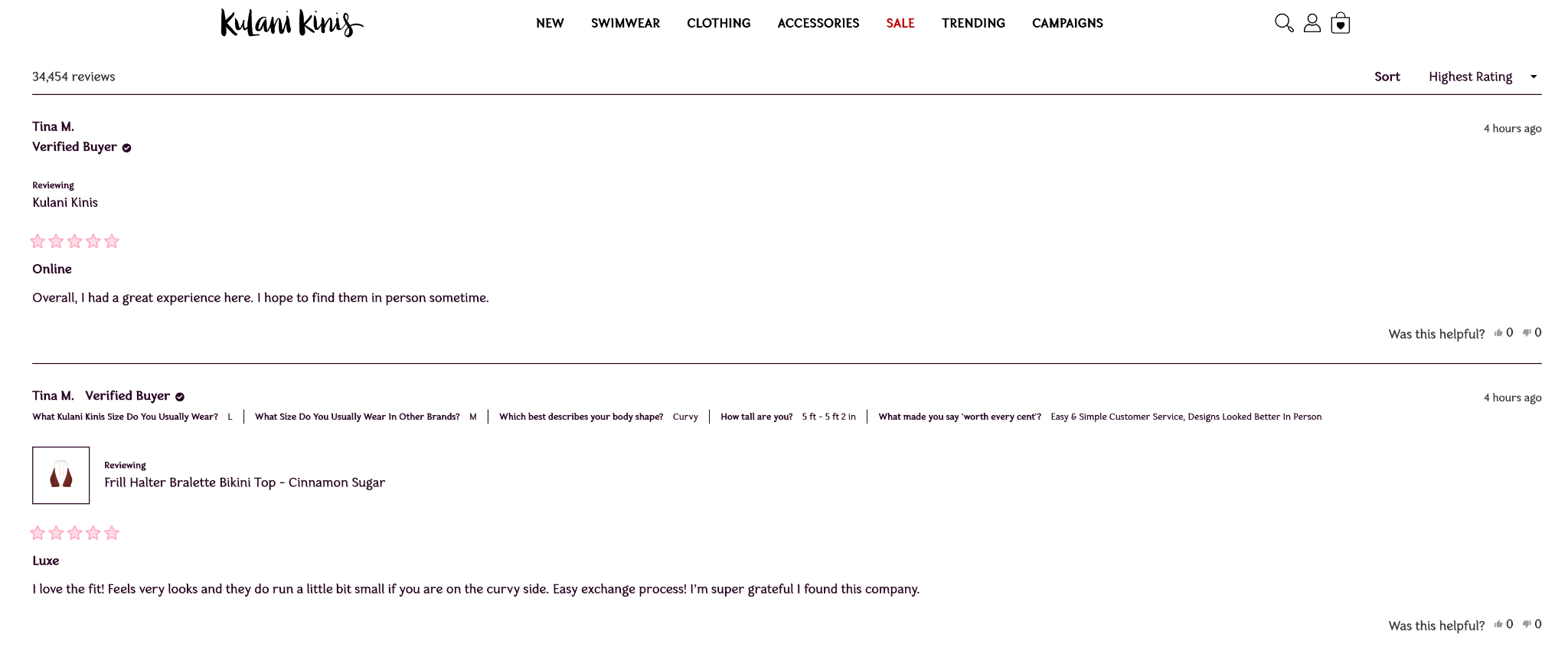
- Reviews should be prominently displayed and should include enough detail to feel credible, just like this:
4. Build an Email Capture and Nurture System
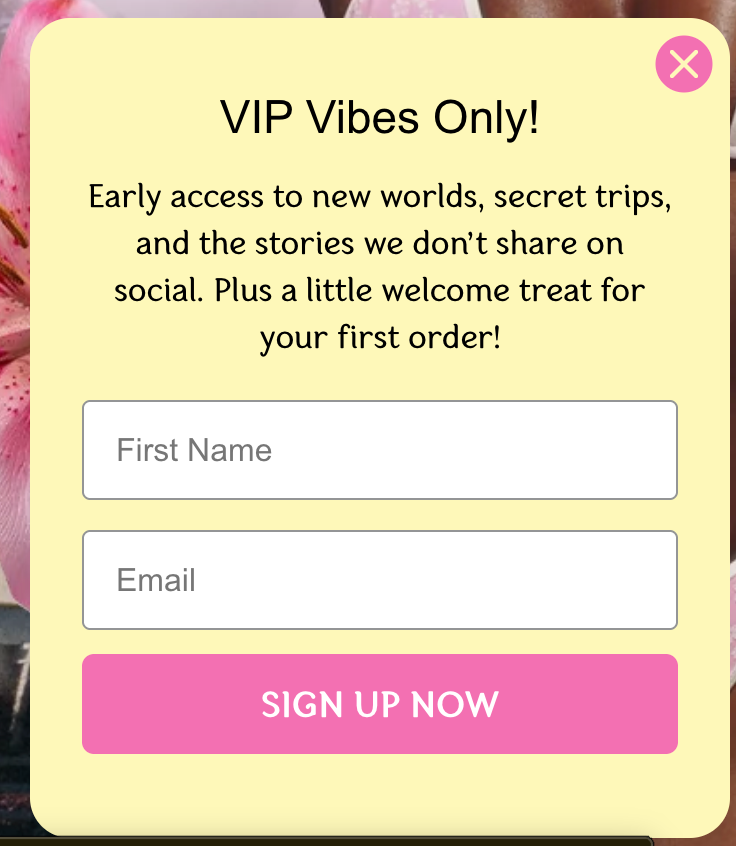
Not every visitor to your store is ready to buy on their first visit. An email list lets you stay in touch with those visitors and bring them back when they're ready. You can use a non-intrusive pop-up offering a first-purchase discount or valuable content related to your niche, just like this one on Kulani Kinis' website:
From there, use a welcome sequence of four to six emails that introduce your brand story, highlight your best products, address common objections, and offer social proof to convert a meaningful portion of those subscribers into first-time buyers. This system works while you sleep and becomes more valuable with every subscriber you add.
5. Streamline the Checkout Process
Every extra step in your checkout flow costs you conversions. The best ecommerce checkout experiences are fast, transparent, and require as little information from the customer as possible. Some effective strategies that help are:
- Guest checkout should always be available.
- Add multiple payment methods to make it easy for customers to make payments regardless of their region.
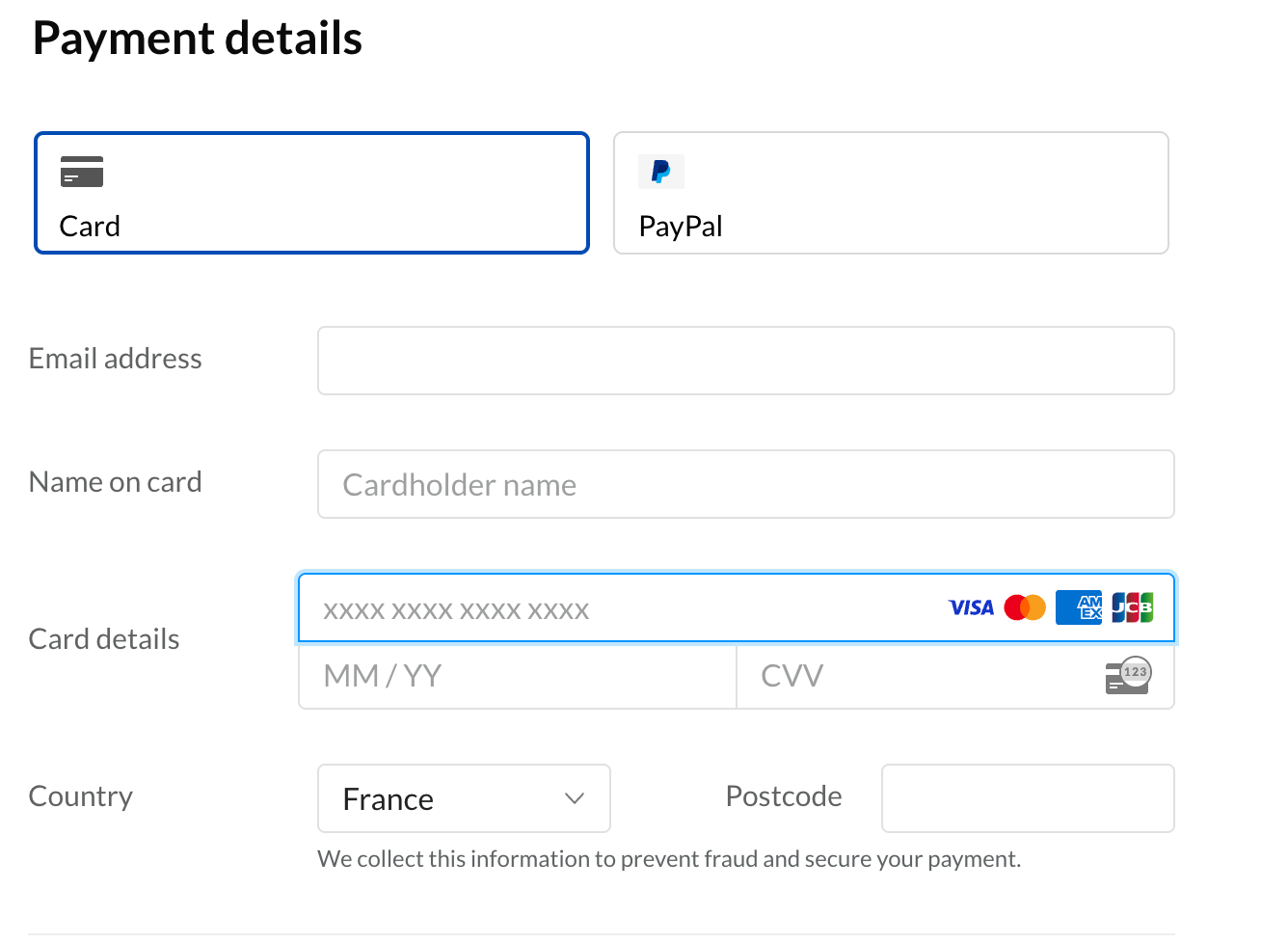
- Shipping costs and delivery estimates should be visible before the final confirmation screen.
- Trust badges, secure payment icons, and a clear return policy displayed at checkout reduce the anxiety that causes last-minute abandonment.
- Test your checkout process regularly on mobile, as a majority of ecommerce traffic comes from mobile devices.
6. Set Up Post-Purchase and Retention Sequences
Your relationship with a customer should not end when the order confirmation email goes out. You need a post-purchase sequence that thanks the customer for their order, sets expectations for delivery, provides tracking information, and follows up after delivery to ask about their experience is the foundation of a good retention system.
To stay top of mind after purchase:
- Set a replenishment reminder for consumable products
- Add a recommendation sequence based on their purchase history
- Give an early-access offer for new arrivals
Ecommerce Sales Funnel Examples
Example 1: Fashion Ecommerce Funnel
A fashion brand builds its awareness funnel through visual platforms.
Funnel stages:
Awareness:
TikTok and Instagram ads that showcase the product in real-world styling contexts drive top-of-funnel awareness.
Consideration:
New visitors land on a collection page or campaign-specific landing page, where an email pop-up offering 15% off captures their information. The welcome sequence introduces the brand aesthetic, features bestselling pieces, and includes a customer styling guide that adds value before the sale.
Conversion:
Use retargeting ads on Meta to bring back visitors who browsed but did not purchase. The checkout process should be streamlined with express payment options to reduce friction and increase purchase completion rates.
Retention:
Post-purchase, customers receive outfit-suggestion emails based on their purchases, encouraging repeat purchases and additional full-price transactions.
Example 2: Subscription Ecommerce Funnel
A subscription ecommerce brand builds its funnel around reducing commitment anxiety and emphasizing ongoing value.
Funnel stages:
Awareness:
Landing pages, social ads, influencer partnerships, and educational content introduce the subscription lifestyle and long-term value proposition rather than focusing on a single product purchase.
Consideration:
Free trials, discounted first boxes, money-back guarantees, and testimonials reduce perceived risk and encourage first-time signups. Product comparison pages, FAQ sections, and subscriber reviews also help overcome hesitation around recurring payments.
Conversion:
A simplified signup flow with clear pricing, flexible cancellation terms, and multiple payment methods increases subscription completion rates. Checkout messaging reinforces savings, convenience, and exclusivity benefits.
Retention:
The onboarding email sequence educates customers on how to maximize the value of their subscription. Brands introduce community perks, personalized recommendations, loyalty rewards, and usage reminders that make the subscription feel essential and emotionally valuable, reducing churn.
Example 3: B2B Ecommerce Funnel
A B2B ecommerce brand builds its funnel around trust, detailed information, and long-term business relationships.
Funnel stages:
Awareness:
LinkedIn content, industry-specific SEO, trade publication ads, webinars, and conference sponsorships drive awareness among professional buyers and decision-makers.
Consideration:
Detailed product specifications, case studies, ROI calculators, bulk pricing breakdowns, and comparison documents help buyers evaluate solutions. Decision-makers often require stakeholder approval, so educational resources play a larger role than in consumer ecommerce.
Conversion:
Quote request forms, sample orders, consultation calls, and account representative follow-ups convert interested prospects into purchasing customers. Flexible payment terms and negotiated pricing structures help close larger transactions.
Retention:
Post-purchase account management, reorder reminders, dedicated support, volume discounts, and long-term contract incentives strengthen customer relationships and encourage repeat wholesale purchasing over extended sales cycles.
Common Ecommerce Funnel Mistakes to Avoid
1. Weak Funnel Stage Transitions
The most expensive mistake in ecommerce funnel design is treating each stage as a separate, disconnected experience. When the messaging in your ad doesn't match the messaging on your landing page, visitors feel disoriented and leave.
Ideally, every transition between funnel stages should feel seamless and logical. The customer should feel like they're following a natural progression, not being handed off between unrelated experiences.
2. Ignoring Funnel Metrics
You cannot fix a funnel you are not measuring. The most common version of this mistake is store owners who track revenue and conversion rate, but nothing else. If you don't know your visitor-to-email-capture rate, your email open rate, your click-to-product-page rate, and your cart-to-checkout completion rate, you have no idea where your funnel is losing people.
Each of those metrics corresponds to a specific stage, and a problem at any one of them can kill your overall conversion rate even if every other stage is performing well. Build your measurement framework before you start optimizing.
3. Focusing Only on New Customers
If the entirety of your marketing budget goes toward acquiring new customers and nothing goes toward retaining existing ones, you are building a leaky bucket. The economics of ecommerce heavily favor repeat customers because they cost less to convert, tend to have higher average order values over time, and generate referrals that bring in additional new customers at no acquisition cost.
4. Neglecting Mobile Optimization
The majority of ecommerce traffic in most categories now comes from mobile devices. If your product pages load slowly on mobile, your checkout form is difficult to complete on a small screen, or your email templates don't render correctly on a phone, you are losing a significant portion of your potential conversions every day.
Mobile optimization is not optional anymore. Test every stage of your funnel on multiple devices regularly, and treat any mobile experience that is worse than the desktop version as a conversion problem that needs fixing.
5. Skipping Social Proof
Trust is the single biggest barrier to conversion for first-time buyers, and social proof is the most effective way to build it at scale.
Stores that launch without reviews, testimonials, or user-generated content are asking customers to take a leap of faith, most are not willing to take. That said, always collect reviews systematically through post-purchase email requests, feature real customer photos on product pages, and respond publicly to both positive and negative reviews to build trust that converts cold traffic into first-time buyers.
Ecommerce Funnel Optimization Best Practices
Here are my top five ecommerce funnel optimization best practices:
1. Run Continuous A/B Tests at Every Stage
Optimization is not a one-time project. The stores that consistently outperform their competitors are the ones that are always testing something: a new headline on the product page, a different subject line in the welcome sequence, a simplified checkout flow, a new format for the cart abandonment email.
The compounding effect of small, consistent improvements across every stage of your funnel adds up to a significant advantage over time. Start with the stage that has the biggest drop-off, fix that first, then move to the next one.
2. Use Behavioral Data to Personalize the Experience
Modern ecommerce platforms and email marketing tools give you enough behavioral data to personalize the experience for different segments of your audience. For instance, a customer who has browsed your highest-priced category multiple times should receive different follow-up content than a customer who keeps coming back to your sale section. Someone who purchased six months ago and hasn't returned should receive a different win-back message than a first-time visitor who just abandoned their cart.
Using the data you're already collecting to deliver more relevant experiences at each stage is one of the highest-ROI investments you can make in funnel optimization.
3. Reduce Friction at Every Possible Touchpoint
Every moment where a potential customer has to work harder than necessary to complete the next step is a moment where you lose some of them. This applies across the entire funnel:
- The click to your product page should load in under three seconds
- The email opt-in should require only an email address
- The checkout flow should offer express options like Shop Pay or Apple Pay
- The return process should be clearly explained and easy to initiate.
4. Build Segmented Email Flows for Different Buyer Types
A single email sequence delivered to your entire list is less effective than segmented sequences tailored to where each subscriber is in their relationship with your brand. Here's what I mean. A new subscriber who has never purchased needs educational content and social proof. A first-time buyer needs post-purchase reassurance and guidance on product use. A repeat buyer needs early access to new arrivals and recognition of loyalty.
Your emails should be segmented to cater to each buyer separately.
5. Leverage Retargeting to Recover Lost Traffic
Most visitors who leave your store without buying are not lost forever. They saw something that interested them enough to click through in the first place, and a well-timed retargeting ad reminding them of what they looked at, perhaps with a time-sensitive offer or a piece of social proof they didn't see the first time, can bring a meaningful percentage of them back.
Final Thoughts on Building an Ecommerce Sales Funnel
Every ecommerce store has a funnel, whether it was deliberately designed or not. The difference between a store that grows predictably and one that plateaus is whether that funnel was built intentionally, measured consistently, and improved over time. The stores that win in the long term understand their customers well enough to meet them at every stage of the buying journey and remove every obstacle between the first impression and a loyal customer.
Ready to transform your funnel into a conversion machine? Check out our comprehensive sales funnel service or read our course reviews to see how we've helped other businesses just like yours. You can also comment below or DM me on Instagram if you have more questions. I personally respond to every message.
Frequently Asked Questions About Ecommerce Sales Funnels
What is an ecommerce sales funnel?
An ecommerce sales funnel is the step-by-step process that moves potential customers from discovering your brand to making a purchase and becoming loyal customers. A typical ecommerce funnel includes awareness, consideration, conversion, retention, and advocacy stages, with each stage serving a specific purpose in the overall customer journey.
Why is an ecommerce sales funnel important?
An optimized ecommerce sales funnel helps businesses improve conversion rates, reduce cart abandonment, increase average order value, and build customer retention systems that drive long-term revenue. Without a structured funnel, most stores rely entirely on new traffic to generate sales, which makes growth expensive and unpredictable.
What are the 5 stages of an ecommerce funnel?
The five stages are awareness, interest and consideration, conversion, retention, and advocacy. Each stage addresses a different phase of the customer relationship, from initial brand discovery through to repeat purchasing and referral behavior.
How do you build an ecommerce sales funnel?
Start by clearly defining your target audience, then build awareness through the channels where that audience spends their time. Create optimized landing pages and product pages that address objections and build trust. Set up an email capture and nurture system for visitors who aren't ready to buy immediately. Streamline your checkout process to minimize abandonment. And build post-purchase sequences that convert first-time buyers into repeat customers.
What is the difference between a marketing funnel and a conversion funnel?
A marketing funnel covers the full customer journey from awareness through loyalty and advocacy. A conversion funnel focuses more narrowly on the mechanics of turning a visitor into a paying customer. In practice, both are part of the same overall system, but the distinction is useful when identifying where in the process a specific problem exists.
How can I improve my ecommerce conversion rate?
The most impactful conversion improvements typically come from simplifying the checkout process, strengthening social proof on product pages, being transparent about total costs before the checkout screen, improving mobile performance, and following up with cart abandonment sequences. Run A/B tests to identify which specific changes move your numbers.
What metrics should I track in an ecommerce sales funnel?
The core metrics are traffic sources and cost per acquisition at the awareness stage, overall conversion rate and checkout completion rate at the conversion stage, and customer lifetime value and repeat purchase rate at the retention stage. Cart abandonment rate and average order value are also worth tracking consistently across the funnel.
What tools help optimize ecommerce sales funnels?
The most commonly used tools include Google Analytics for traffic and behavior data, Shopify's native analytics for store-specific metrics, heatmap software like Hotjar for understanding where visitors drop off on key pages, an email marketing platform for nurture and retention sequences, and a CRM if your business involves higher-touch customer relationships. Start with the tools that address your biggest current gap rather than trying to implement everything at once.
How do loyalty programs improve customer retention?
Loyalty programs give customers a concrete reason to return to your store rather than buy the same or similar products elsewhere. Points systems, exclusive member discounts, early access to new products, and referral rewards all increase the perceived switching cost of leaving your brand. The most effective loyalty programs are simple to understand, easy to participate in, and deliver rewards that customers actually want.
What are common ecommerce funnel mistakes?
The most damaging mistakes are treating funnel stages as disconnected experiences, neglecting retention in favor of acquisition-only spending, failing to measure each stage individually, skipping social proof in the consideration stage, and building a funnel that works well on desktop but breaks down on mobile.
What is cart abandonment in ecommerce?
Cart abandonment happens when a shopper adds a product to their cart but leaves the site before completing the purchase. The most common causes are unexpected shipping costs, a checkout process that is too long or complicated, a lack of trusted payment options, and general purchase hesitation. Reducing abandonment through checkout optimization and cart recovery email sequences is one of the highest-ROI improvements available to most ecommerce stores.
How often should you optimize your ecommerce funnel?
Funnel optimization should be continuous rather than periodic. Review your core metrics weekly, run at least one active A/B test at any given time, and conduct a more thorough funnel audit quarterly. Markets shift, customer behavior evolves, and a funnel that was performing well six months ago may have developed new leaks. Treat optimization as an ongoing operational practice, not a one-time project.